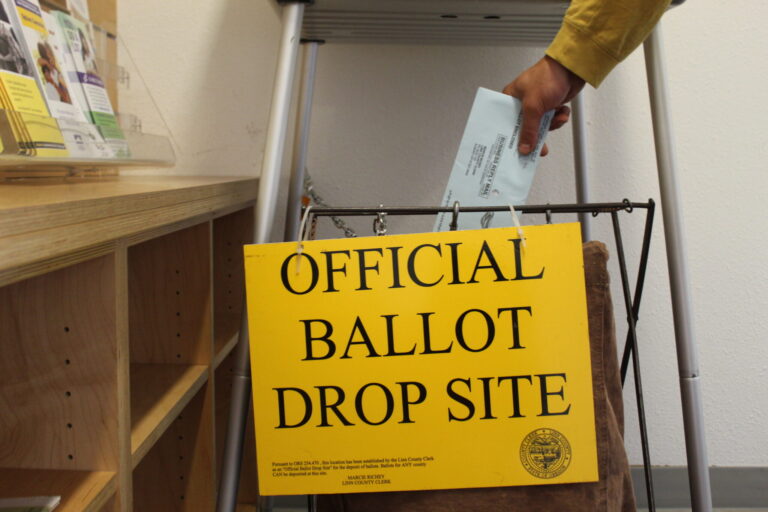
Keizer voters apparently won’t get a say this fall on the city’s substantial increase in police fees after a split Keizer City Council stopped action on a public advisory vote.
That means that the doubling of fees paid by homeowners and more dramatic increases for businesses will not face the court of public opinion. The police fees charged on utility bills go up in two stages – Sept. 1, 2026, and Jan. 1, 2027.
The city expects to collect an extra $2.5 million in the coming budget year to avoid eliminating up to 10 positions. The motive behind the council-approved increases was sustaining operations of the Keizer Police Department, which takes up about 75 cents of every dollar the city spends in its general fund.
Some councilors for months had been urging a public vote. They talked of putting a measure on November’s general election ballot seeking voters’ advice.
The roadblock popped up Monday, June 1, as councilors considered changing city law to allow such a vote. The city currently doesn’t have a provision for such nonbinding votes.
City Attorney Joe Lindsey mapped out the path to the ballot in his report to the council.
The phrase “police fee” didn’t come up as councilors discussed the law change, but clearly that was the political elephant in the room.
Some councilors supporting a public vote have been noncommittal about whether they would follow the results. A vote on the police fee would have happened after one increase was already in place. Whether councilors would reverse that increase and scrap the second has never been clear from their discussions.
Mayor Cathy Clark opposed the notion of an advisory vote.
She noted that the results would not bind the council, and that councilors could ignore the will of the voters.
“It doesn’t feel honest to me to ask for an advisory vote and then not to commit to following the outcome of that election,” Clark said. “I cannot in good conscience support something that is vague.”
Councilor Marlene Parsons wondered why councilors would seek the opinion of voters without declaring whether they would follow the results. She committed to do so.
“If voters all say no, then I’ll say no,” Parsons said.
Councilor Shaney Starr, who led the council task force on the police fee, decided not to support moving ahead with an election – for now.
Starr said she first wanted to learn what other Oregon cities provide for advisory votes and what has been the result of such votes.
Lindsey explained that if the council on Monday night deferred changing the local election law, the city could be out of time to get a measure on the November ballot. The council would have to vote unanimously at its next meeting to change the election law for a ballot measure to still be possible.
Clark’s remarks left it clear that such a unanimous action wasn’t likely.
Clark, Parsons, Starr and Councilor Kyle Juran voted against changing the election law. Juran didn’t explain his vote.
Councilors Dan Kohler, Soraida Cross and Lore Christopher voted to go ahead with the law change.
Earlier in the meetings, councilors did vote unanimously to approve the city’s budget for the year starting July 1. Besides police fee increases, the budget includes increases in fees for water, sewer and stormwater.
The budget reflected only minor changes from that proposed last month by City Manager Adam Brown. That included deferring the purchase of four police cars to save about $200,000, cutting the $5,000 membership to SEDCOR, cutting neighborhood association spending by about $2,200 and reserving $2,000 for Keizer United, a local nonprofit helping Keizer families.
SUBSCRIBE: Don’t miss any of the news of Keizer, produced by your professional local reporters. An online subscription is $10 a month, and takes just a moment when you go HERE.