When Dennis Richardson was elected Oregon secretary of state, on the same day and party ticket as Donald Trump first was elected president, he moved quickly to look into a subject Trump talked about then and ever since: Voter fraud and election corruption.
The following February, Richardson reported what he found in the Oregon voting system: Some areas for improvement, but generally a system that works well and cleanly. Once a skeptic of the Motor Voter registration system, he had revised his view, saying it “actually has strengthened us in some ways.”
He warned against unfounded claims of voting problems because “it causes greater distrust of the government. … I want to make sure that the citizens of the state can trust their (voting) system.”
Richardson did not stop looking for bugs in the system, however, and he found some. In September 2017, he reported his office had found 54 possible instances of voter fraud, across Oregon, in the previous year’s general election — in an election where 2,051,448 ballots were cast, or about 0.002%. And those were simply questionable votes. Upon investigation, nearly all cases were found not to merit criminal charges.
In 2020, the Legislative Fiscal Office reviewed vote by mail in Oregon and found the state attorney general’s office (which handles cases of voter fraud) “obtained 38 criminal convictions for voter fraud out of the 60.9 million ballots in Oregon elections cast over a 19-year period. That amounts to a rate of .00006%. These figures demonstrate that voter fraud is exceedingly rare in Oregon, and is no more widespread in vote by mail elections than it is in polling place elections.”
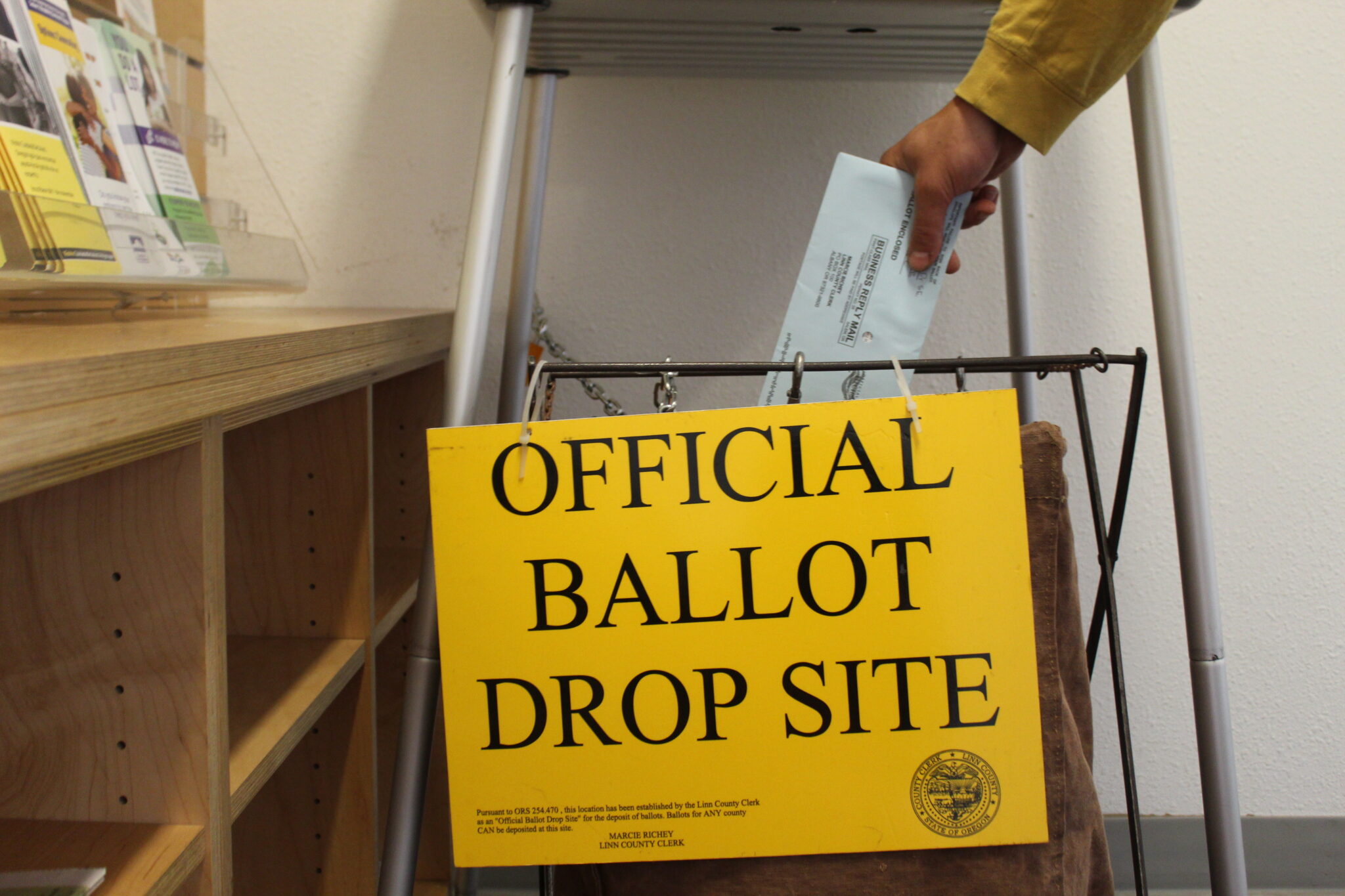
For some Oregonians — and other people around the country — all this still doesn’t feel quite right. Getting ballots through the mail, and sending them out that way (though many people, myself included, prefer to use one of the state’s ballot boxes) somehow intuitively doesn’t seem very secure, not in the same visible way filled-out ballots are when quickly dropped in a locked box at a polling place in front of poll workers.
The Trump administration has piled on, implicitly accusing many states, Oregon among them, of failing to keep people who shouldn’t be voting from casting ballots.
Across the border in Idaho, state officials like those in Oregon have declined to provide to federal officials some sensitive voter information. That has led to federal legal action, and as in Oregon threatening letters were sent from the Trump Department of Justice. In Trump-supportive Idaho the attorney general’s office replied with the rebuke, “Stop threatening your friends in Idaho.”
Evidently, threatening states which voted against Trump would be less objectionable, although Oregon (like many other states) has also objected strongly.
Intuitive or not, the Oregon voting process is secure.
Bear in mind that most election administration happens at the county level. Clerks in Oregon’s 36 counties are most directly responsible for distributing ballots and counting those returned, and the process is handled by local people. The secretary of state, who does have responsibility for overseeing election processes, is mainly concerned with ensuring the counties are acting properly. That’s worth remembering: Any claim that elections have been corrupted is really an accusation that all our county clerks have been — and there’s no evidence of that.
The statewide system seems robust. Each ballot has a unique bar code, and they are tracked through the system. (During election periods, voters can obtain notices from the state about when their ballot was received by county officials, and where it is in the system.)
The 2020 legislative audit said “There are numerous processes built into Oregon’s vote by mail system to ensure integrity, including unique barcodes to track ballots, signature verification to prove voters’ identities, and election security plans filed by county elections offices. Vote by mail also leaves a paper trail that can be audited. In fact, two academic studies have concluded that the election results in vote by mail elections are generally more accurate than the election results in polling place elections.”
Cyberattacks are always a threat, but so far the system seems well protected (and regularly reviewed), and the core counting and related processes aren’t linked to the internet.
On the back end, the initially-reported election results are rechecked in several ways. Since 2008 the state has overseen after-election audits which include human hand counts to verify the accuracy of the machine counts. Many other states take similar steps, and around the nation the results have been generally the same: Mistakes are rare.
To be human-made and human-operated is to be less than perfect. But the babble from the beltway notwithstanding, Oregon’s mechanisms for voting come remarkably close.
Randy Stapilus is an author, former newspaper editor and longtime observer of Oregon politics.
Oregon Capital Chronicle is part of States Newsroom, a nonprofit network of news bureaus supported by grants and a coalition of donors. Oregon Capital Chronicle maintains editorial independence. Contact [email protected].