Another controversy has emerged over sports fields owned by the city of Keizer.
Not a dime has flowed into the city treasury when the expectation for Keizer Rapids Park’s turf fields was that $120,000 a year would come in.
A nonprofit group in charge of the fields has splintered, operating for a time with just one board member.
And that board member was stuck stocking toilet paper in park bathrooms.
The Keizer City Council is giving the nonprofit a short time to shape up operations.
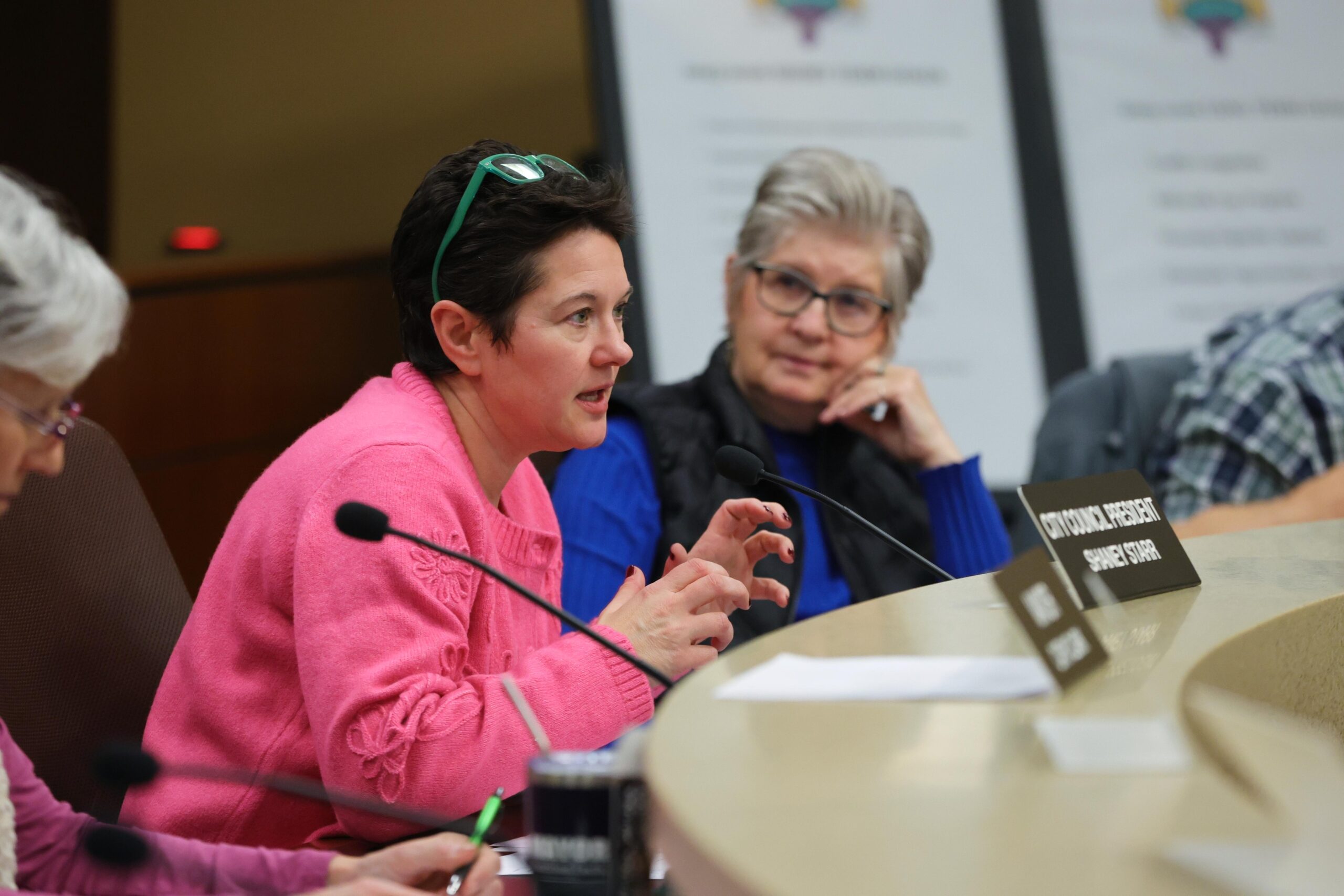
Councilor Shaney Starr in recent meetings has closely questioned those in charge.
“We cannot allow a gem of a resource such as the fields at Keizer Rapids Park to get to this point ever again,” Starr said.
Councilor Lore Christopher was alarmed by what she heard.
“We did not know how bad it was,” Christopher said.
The concern swirls over the management of the playing fields at the city park at the west end of North Chemawa Road.
Last year, city officials had to deal with concerns over management of the Keizer Little League complex, finally switching from a local manager to a professional sports group.
At Keizer Rapids Park, the city in 2024 gave a short-term management contract to a group called Mid Valley Soccer Club, once known as the Keizer Soccer Club.
At the time, Dustin Karstetter sounded the alarm about the arrangement. He is a former club president and once was a member of the Keizer Parks and Recreation Advisory Committee.
“This decision will almost certainly be a net economic loss for the city,” Karstetter wrote in a letter to the city council on Aug. 18, 2024. “The long-term health and viability of a multi-million-dollar project is at stake.”
The following year, in April 2025, the city awarded a two-year contract to a new nonprofit, the Keizer Community Field Association. The group was a collaboration between the soccer club and Salem Women’s Football Association.
The new organization was to schedule use of the fields for sports and other events. It was to collect dues and fees, report every three months to the city and turn over $120,000 a year.
City officials said quarterly reports were late. And they said the city hasn’t yet received any money from the arrangement.
That has resulted in public finger-pointing.
Rebecca Ross, president of the women’s football group, became the paid general manager of the field group.
“From my perspective as general manager, I was doing the best I could until Mid Valley Soccer in December started raising a ruckus because they felt they were entitled to the field,” Ross said.
She said she was stuck handling maintenance at the turf fields instead of overseeing bookings and other tasks. Volunteers didn’t step up as expected.
“Two to three times a day, I was changing toilet paper” without help, “just complaints,” Ross said.
She said she was fired in May.
The organization seemingly fell apart earlier this year.
The president resigned.
A new president, Nick Wells of Keizer, was installed in January. He was the lone person on the field group’s board.
In May, he reported to the council of the changes – and optimism the group could get back on track.
“Your concerns are absolutely warranted,” he said then. “I’ve been out there cleaning toilets nearly every day.”
He said in a written report that the Keizer Community Field Association “is taking meaningful steps to improve operations, strengthen accountability and increase financial support.”
Councilors were so concerned about what they heard they called for a special meeting, which occurred in early June.
They heard again from Karstetter, who questioned whether the nonprofit should continue managing the fields. He recommended councilors consider terminating the contract.
He said in a subsequent written statement to the councilors ahead of their work session that questions remain about the field management.
He wrote that there was “no clear sign of improvement other than what has been provided in purely speculative projections recently.”
That apparently referred to statements from Wells to the council that he thought the nonprofit could dramatically improve finances. Wells declined an interview when contacted recently, saying his information would be provided to the council in public session.
At the June council meeting, Starr noted that the association was supposed to have volunteers donating labor for the field.
“Those duties and responsibilities were never laid out to the members,” he said. “That just never happened.”
He agreed the field group was supposed to collect dues from its members but “no dues have ever been invoiced.”
Wells acknowledged that the group was required to have at least three people on its board. He said he served alone from January until a second member was added in April.
Starr wasn’t satisfied.
“I’m uncomfortable with contracting with an organization that isn’t in compliance with state law,” Starr said.
Councilor Kyle Juran said he thought having only three board members was “risky.”
Starr pressed that the council didn’t learn of problems until recently “and we’re over a year into the contract” and “we’re facing a pretty significant financial shortfall and that’s alarming.”
Councilor Dan Kohler outlined three goals he had for the turf fields. He wanted local youth to have access to play for a reasonable fee, ensure long-term care of the fields, and see the fields used more often.
“We invested a lot of money into those fields,” Kohler said. “And we have people that are saying, ‘You put a lot of money into this but I don’t see them being used all the time.’ So, I don’t need that extra heat.”
Christopher said the city has “got to make changes. We’ve got to do drastic things now.”
She asked what the council’s options are.
City Manager Adam Brown said the city could seek new proposals for managing the turf fields – or add them to the portfolio of the company now overseeing the Little League complex.
Wells assured councilors matters were improving.
“I have every intention of proving that we’re going to be successful,” he said. “We need to make this self-sustainable and I believe that we can absolutely do that.”
SUBSCRIBE: Don’t miss any of the news of Keizer, produced by your professional local reporters. An online subscription is $10 a month, and takes just a moment when you go HERE.