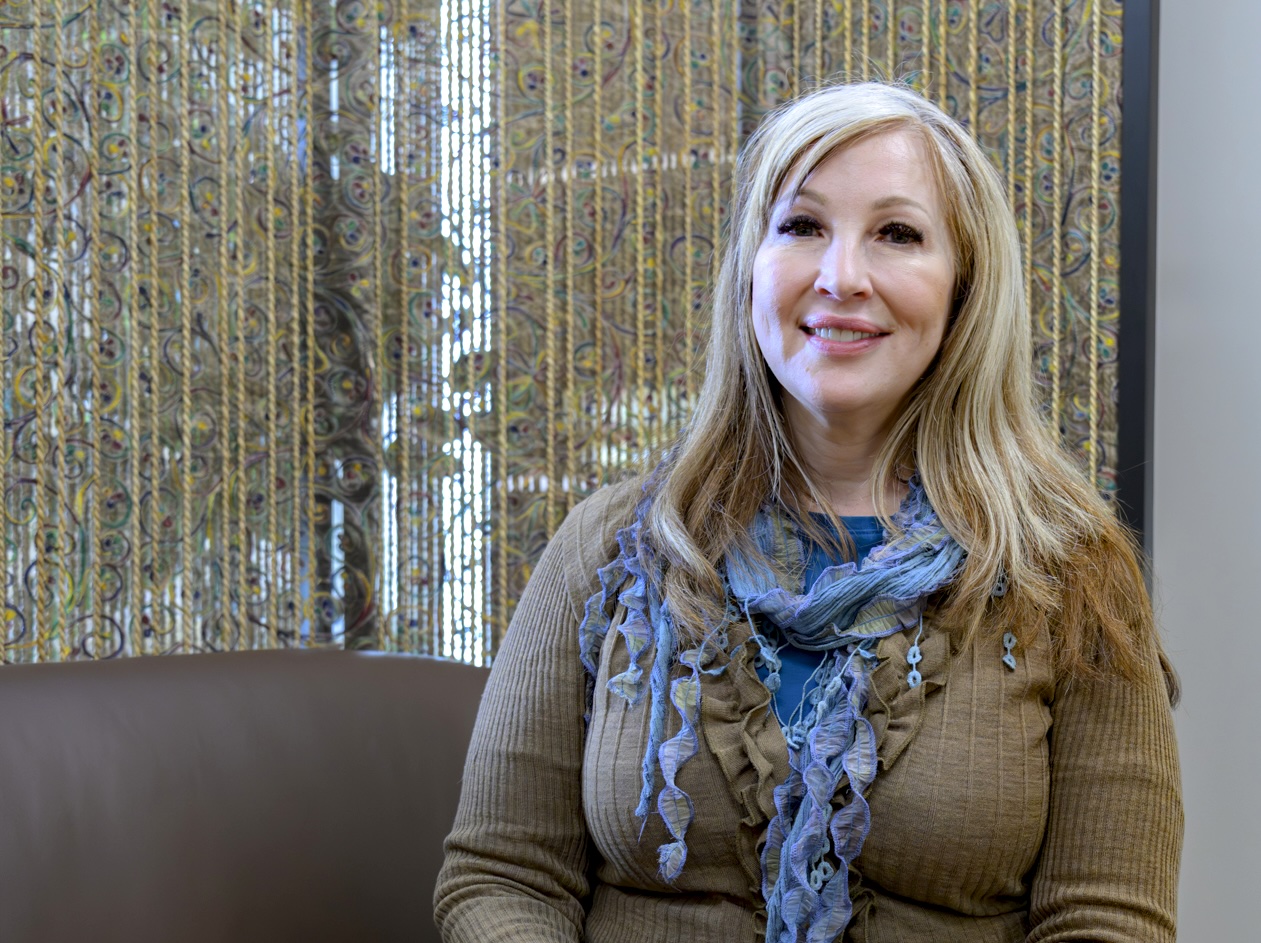
In the closing days of the recent legislative session, Kim Thatcher ticked off her final acts as a senator.
The Republican representing Keizer noted her final committee testimony.
She noted the last minority report she would present on the Senate floor.
And she carried her last bill in a legislative career of more than 20 years.
Thatcher’s term is up at the end of 2026 and she is barred by law from running again. She still has work to do as a senator until then – committee meetings and occasional Senate sessions to approve gubernatorial appointments.
“It was really a cool, cool adventure,” she said as she reflected on her political career in a recent interview.
Thatcher has been in the highway construction business for more than 30 years, founding KT Contracting Co. in 1992 and then four years later a separate company that rented highway construction signs and barriers. KT Contracting, once based in Brooks, is now operated by Thatcher’s daughter in Washington state. The signing company was sold five years ago.
She was running her companies and raising a family when she was approached about running for the House seat representing Keizer.
“That was not on my radar at all,” she said.
Thatcher, who is also a pilot and plays piano, initially wasn’t interested. The pressure to run kept coming.
“I prayed about it and I got a really strong answer and I didn’t like that answer,” she recalled. “I went and meditated some more and decided, okay, yeah, I’m supposed to run.”
She won that race in 2004 and remembers attending her first caucus meeting. That’s when legislators of a party meet behind closed doors to figure out their political strategy.
The meeting was “chaotic” and Thatcher thought to herself, “Boy, these people like to talk.”
She soon discovered that her calendar could be filled with meetings, dinner engagements and fundraising events.
Thatcher said she prefers to be at home. Eventually, she cut back on such social functions.
In 2014, Thatcher was encouraged to run for the Senate seat being vacated with the retirement of Larry George of Sherwood.
She won handily with 64% of the vote. In the Senate, she encountered a different environment.
“When I got to the Senate, my first thoughts were, it was like leaving the cafeteria to go to the library in junior high. That’s what it was like,” she said, recalling the quieter atmosphere. “It was like going from a junior high cafeteria to maybe a college library.”
Then the pandemic struck. Remodeling of the Capitol further changed where and when legislators could gather.
She says that disrupted chances for legislators to talk informally in the Senate lounge, a private enclave.
“We weren’t talking about bills, necessarily. We were talking to each other as human beings,” she said.
In 2020, Thatcher won the Republican nomination for secretary of state. She said she was stunned at the scale of her subsequent loss in the general election since polling showed an even race against the Democrat, Shemia Fagan.

The senator believes Oregon needs to reconsider voting by mail, as President Donald Trump has been pushing nationally. She points out that only one Republican has won a statewide office in Oregon recent years. That was Dennis Richardson, who was elected secretary of state in 2016. He was the first Republican in statewide office since 2002 and there has been none since.
Thatcher ran for reelection in 2022, going against her sense it was time to move on. She was motivated, she said, by worries that the Republicans might not field a strong candidate to hold the Keizer seat.
She decided, though, it would be her last term.
“It’s just that at the end of session, you felt like you had a bloody forehead from hitting your head against the wall, and then things would calm down in between the sessions, and you felt renewed and ready to tackle the world again,” she said.
Her next session followed the retirement from the Senate of Peter Courtney, a Salem Democrat who as president was a master of the legislative process. His successor as president, Rob Wagner, a Democrat from Lake Oswego, was less open to cross-party deals, Thatcher said.
That was underscored in 2023, when Republican senators brought legislative progress to a halt. They left the Capitol and scattered. They were unhappy with the Democratic push on legislation related to gender-affirming care and other health care.
By law, a legislator who racks up 10 unexcused absences is barred from then seeking reelection. Thatcher crossed that threshold during the walkout.
“There were some other issues having to do with the rules and how the Senate was running. And, I mean, this is the first time we didn’t have Peter Courtney there, and it was a lot different world,” she said. “It was much more difficult.”
Thatcher prided herself on working with both Republicans and Democrats in her early years in the Legislature.
She didn’t hold back, though, dicing up the Democrats when the 2023 walkout ended.
“Make no mistake about it, they are still after our children. The Democrats still want total power over every position of government and every role of families in this state,” Thatcher said in a rare press release: “Unfortunately, negotiations did not address the outright and ongoing corruption by the Democrats, nor did they adequately address the tyrannical bills.”
Being in the minority almost her entire career, Thatcher still managed to advance reforms she thinks were important to Oregonians.
One bill established the Transparency Oregon Advisory Commission in 2009. That required state government to put out more information about its operations and expenses. She is chair of the commission.
Another was compelling the state to more fairly treat those who were wrongly convicted of crimes.
Among bills she proposed that didn’t advance were proposals related to small estates and wrongful allegations of child abuse.
“I can’t say those are the most important things in the world, but I really thought those could have been bipartisan type issues,” she said.
She introduced the last bills of her political career as the Legislature convened in early February.
Thatcher also caught attention for being the lone senator to speak against a funding bill.
That came last March 4, when she stood to oppose providing $350 million in state funds to remodel Portland’s Moda Center. She didn’t see the need for the public to support the new billionaire owner of the Trail Blazers.
As the clock ticked down toward adjournment, Thatcher mentally marked some last actions.
“It was kind of like, wow, this is just coming to this, this end. And it’s kind of cool. I mean, I’m kind of looking forward to just having a normal life,” she said.
When she gives up her Capitol basement parking space, Thatcher plans to sell her Keizer home and join her husband in Nevada.
She said she isn’t quite done with community service.
Thatcher described how she was struck by what she learned about USO service to veterans and troops. The organization provides special airport lounges for those in the military and otherwise supports them and their families.
During a legislative hearing, representatives described such services.
“That sounds really cool. Do you take volunteers?” Thatcher asked them.
She intends to volunteer with the group once in Nevada.
Thatcher urges others to take their turn at community service, whether it’s for a city committee or the Legislature.
“All the cogs work together right now, and that’s why it’s important to have more participation in those cogs,” she said.
She understands why people might shy from such service.
“I didn’t really want to get involved with politics,” she said. “I was busy with my business. I was busy with my family. I was busy with church, all the stuff, and so I know life happens, and it’s really hard to carve out time.”
She urged citizens to pick a couple of years to devote to public service.
Thatcher has mixed feelings about her departure.
“It’s a highly unusual situation to serve in a legislature. I mean, it’s not something everybody gets to do,” she said. “And so, it was quite an honor, and a very cool thing, but also very frustrating. I mean, it was just a whole spectrum of emotions and experiences.”
SUBSCRIBE: Don’t miss any of the news of Keizer, produced by your professional local reporters. An online subscription is $10 a month, and takes just a moment when you go HERE.